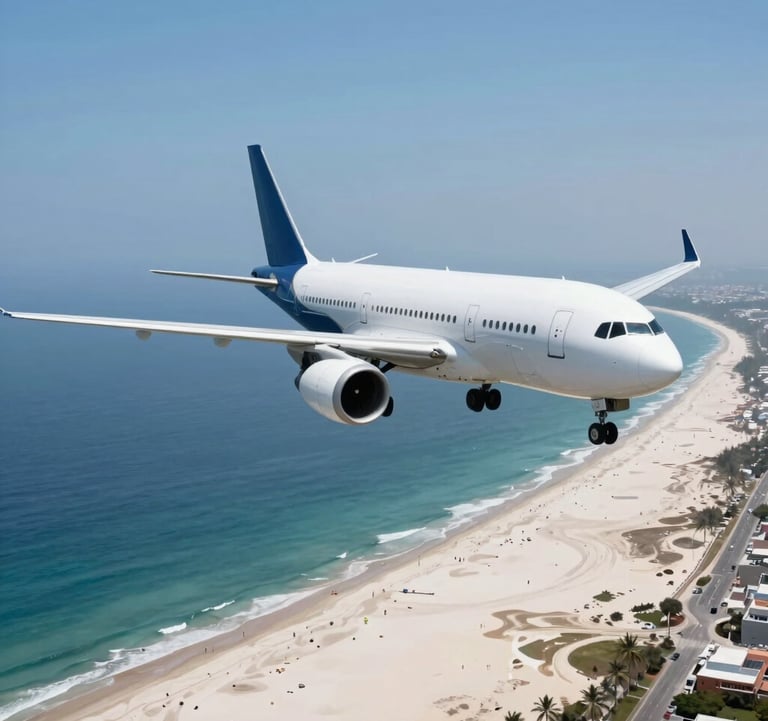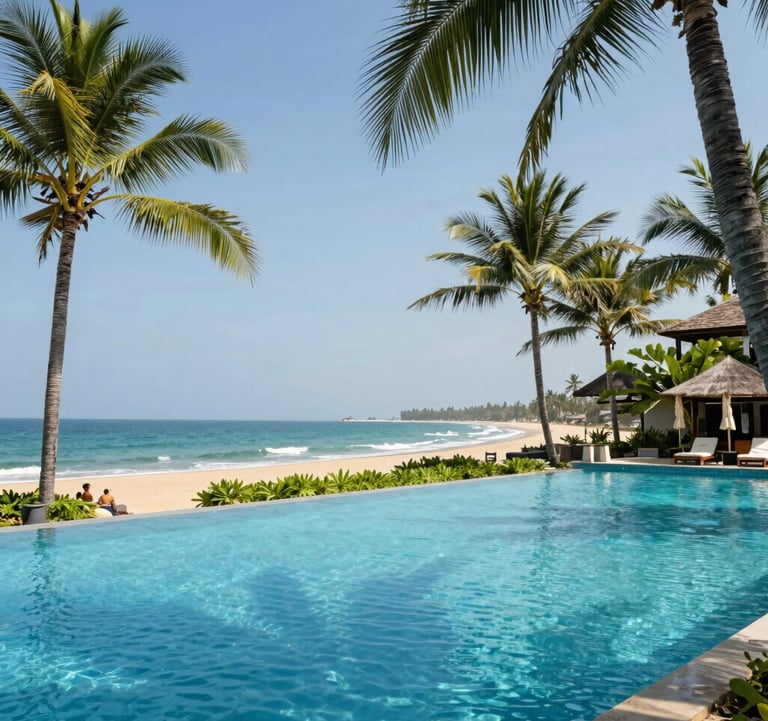
Find your perfect holiday
mouse over
                  Sky Travels
               Flight specialists since 2001
 
  Welcome to Sky Travels. Africa Travel Guide   Search over 100 airlines for cheapest international flights from and to all countries, pay in 26 different currencies and credit cards.


Travel Guides from Cape Verde to Tunisia - travel guides to Africa from Sky Travels

Cape Verde Islands
The Cape Verde Islands are a bewitching blend of Portuguese and West African influences, with European-style architecture mingling alongside traditional African scenery.
Made up of ten volcanic islands and five tiny islets, Cape Verde combines spectacular mountain ranges with deserted beaches. Each individual island has its own character, from lush and lively Santiago to the quiet diving islet of Boa Vista. The islands have some of the best windsurfing conditions in the world, and diving is a treat, with many 16th century shipwrecks lining the ocean floor.
Many visitors’ first impression of Cape Verde comes through the mournful songs of Cesaria Evoria, the island’s best known singer. The ‘barefoot diva’ is the best exponent of morna, a lovelorn type of folk music similar to Portuguese fado. Music is a key component of life on Cape Verde, and several islands stage exuberant carnivals, with the best known being the Baia das Gatas Festival.
More about Cape Verde Islands

Egypt
Travellers have marvelled at Egypt’s archaeological wonders for centuries, ever since the Ancient Greeks visited the pyramids. Today, millions of tourists are attracted each year to the pyramids, temples, mosques and great monuments of the Nile Valley, as well as the stunning diving resorts of the Red Sea.In 430 BC, when Greek historian Herodotos visited the magnificent monuments in Egypt, many of them were already 2,500 years old. Most, from the pyramids of Giza to the astonishingly beautiful temples of Karnak or Philae, or the painted tombs in the
Valley of the Kings, can still be visited today. The sheer age of this great civilization is mind-blowing. The life-giving Nile runs north through the country to the Mediterranean, feeding an emerald ribbon of irrigated fields adjacent to villages shaded by date palms. Whether on a cruise ship or traditional felucca boat, life on the water is a constant visual feast, while the few huge, dusty cities - Cairo, Alexandria, Aswan and Luxor - are a babble of exotic sounds and smells.  More about Egypt

The Gambia
Although The Gambia is mainland Africa’s smallest nation, it is scenically varied, with sandy beaches, lush tropical forests, swamps, marshes and large areas of wooded savannah. The River Gambia, one of Africa’s great waterways, dominates the country. The Gambia is a birdwatcher’s paradise, with over 540 different species. While the country’s parks, reserves and up-country villages are a major draw for ecotourists and those interested in African culture, for many visitors it is the country’s pleasant tropical climate and relaxing beach resorts which are the star attraction. The area around the River Gambia, known to the Carthaginians in the fifth century BC, subsequently became part of several successive African empires. During the colonial period, several European powers contested for ownership of the river and the rich trade which it carried. Britain eventually gained control of the lowest reaches, establishing an enclave in the surrounding French territories of Senegal and a useful base from which to launch attacks on French trading settlements. More about The Gambia

Ghana
Ghana has a rich natural heritage. A narrow grassy plain stretches inland from the coast, widening in the east, while the south and west are covered by dense rainforests which are being developed into nature parks, such as the national park at Kakum, for ecologically-minded tourists. Although Ghana’s national parks and game reserves are relatively small compared to other African countries, species of antelope, monkeys, lions and elephants can be seen here. Birds and butterflies are particularly numerous in Ghana’s forests. Ghana’s coastline is dotted with sandy palm-fringed beaches and lagoons where water sports can be practiced. There remain many traces of the country’s rich history. Ghana still boasts 42 European forts and castles including Elmina and Cape Coast Castles which are all recognized by UNESCO as World Heritage Monuments as well as sites of wars between the British and the indigenous population. Colourful traditional festivals full of pomp and pageantry with chiefs and queen mother’s riding on lushly gilded palanquins can still be seen throughout the country while traditional open markets provide the sounds and sights of the African bazaar. More about Ghana

Kenya
Kenya is regarded by many as the ‘jewel of East Africa’, and has some of the continent’s finest beaches, most magnificent wildlife and scenery, and an incredibly sophisticated tourism infrastructure. It is a startlingly beautiful land, from the coral reefs and white sand beaches of the coast to the summit of Mount Kenya, crowned with clouds and bejewelled by strange giant alpine plants. Between these two extremes is the acacia-studded rolling savannah, which is home to game parks such as Amboseli, the Masai Mara, Samburu and Tsavo; the lush, agricultural highlands with their sleek green coat of coffee and tea plantations; and the most spectacular stretch of the Great Rift Valley, the giant scar across the face of Africa. Above all, Kenya is a place for safaris, and one-tenth of all land in Kenya is designated as national parks and reserves. Just about every African plains animal is present. Over 50 parks and reserves cover all habitats from desert to mountain forest, and there are even six marine parks in the Indian Ocean. More about Kenya

Mali
With its giant mud-built mosques, villages carved into cliff-sides and massive camel caravans traversing the desert, Mali makes for a stunningly surreal destination. Rapidly developing, particularly in the main cities, tourists can find high standards of accommodation and cuisine on offer. Intriguing and colourful markets, vast desertscapes and ancient tombs and relics are all waiting to be discovered. All of this makes it hard to believe Mali is one of the world’s poorest countries. Once an overseas territory of France, Mali gained independence in 1960, and today it is one of the most politically and socially stable countries in Africa. More about Mali

Mauritania
Mauritania is a mysterious, little-known Saharan country, where temperatures in the dry desert heat can reach 57°C (135°F). Much of the land is dry and inhospitable and many locations are difficult to reach without long journeys in 4-wheel drive vehicles. Ouadâne, an oasis settlement in the north concealed by waves of colored sand dunes, contains 3,000 manuscripts and an ancient mosque, justifying its UNESCO World Heritage Site status. Northern Mauritania also contains the seventh holiest city of Islam, Chinguetti. In the Middle Ages, Mauritania hosted the Almoravid movement that spread Islam throughout north Africa. The country has a colorful, indigenous nomad Moorish population. The coast is an 800km (500 mile) sandy beach, devoid of most vegetation but supporting an astonishingly large and varied population of birds. The Parc National du Banc d’Arguin is a stopover for birds migrating between Europe and Africa. Though it remains one of the world’s poorest countries, exploitation of Mauritania’s offshore reserves of oil and natural gas could bring prosperity in the future. More about Mauritania

Mauritius
With world-class hotels offering the best service in the Indian Ocean and a renowned gastronomy as well as top spas and golf, Mauritius also offers more to do than many tropical islands, with trekking, mountain climbing and ecotourism playgrounds. And with its signature sunny days, the world’s third largest coral reef surrounding a turquoise lagoon and silky, blonde, sandy beaches, this island certainly comes close to paradise. Off major shipping routes, Mauritius remained uninhabited until the 16th century, allowing it to develop into one of the world’s biodiversity hotspots. It was favoured by pirates and occupied briefly by the Dutch before the French brought African slaves to work the sugar plantations. Captured by the British in 1810, Mauritius achieved independence in 1968. Its diversification into textiles, tourism and, of late, financial services, telecommunications and cyber services has been an Indian Ocean economic success story. So too has its stable multicultural society. Descendants of Indian labourers brought in after the abolition of slavery in 1835 now comprise 70% of the population, and Chinese and Muslim traders add to a French and Creole cultural legacy. This friendly co-existence of cultures expresses itself in croissants for breakfast and curry for dinner, and garish Indian temples near French colonial mansions. More about Mauritius

Morocco
As you relax in your hammam (steam bath), tuck into your tagine (stew), bargain in the souks or slide into your comfy caftan (ankle-length gown) - Moroccan trends much copied elsewhere but never equal to the originals - you may be surprised how easily you slip into another culture and another century. In these small signature moments of pleasure, Morocco warps all sense of time and place as surely as a desert mirage. To get your bearings, just look to the horizon. You will notice refined minarets and rugged mud-brick ksour (fortifications), sparkling coastline with silken sand and striped canyons carved out of the High Atlas Mountains. Morocco has been staunchly independent throughout its history yet remained open to ideas, creating a heady mix of cultures, religions and languages with ancient roots and a strikingly modern outlook. The influence of Romans, Arabs and Europeans is spotted in monuments throughout the country. Though you will hear French spoken in city boulevards - a vestige of the 50-year French Protectorate - a half-dozen Berber languages and Moroccan Arabic are still widely spoken. So is Morocco Mediterranean, African, Arab or Berber? Correct answer: all of the above. For centuries travellers have crossed shifting sands and braved mountain passes in search of mythic Morocco, expecting to be dazzled by its royal palaces, unexpected oases, distinctive handicrafts and spectacular feats of hospitality. Modern-day Morocco doesn’t disappoint. Whether you’ve come to relax in family-style riads (guest houses) or stretch your imagination on treks to distant Berber villages, you’ll meet Moroccans who go out of their way to exceed your expectations. The people who have called Morocco home for millennia have proved themselves adaptable to Sahara Desert silences and chatty market-day medinas (old towns), mingling in Tuareg trading posts and ancient mellahs (Jewish quarters). The greeting that reaches your ears today echoes across the centuries: Ahlanwasahlan, you are welcome in Morocco.  More about Morocco

Mozambique
Mozambique has had a rough ride over the past few decades: colonial rule was followed by many years of civil war, devastating famine and natural disasters. However, since peace was agreed in 1992, the country has been piecing itself together once again and opening its doors to tourism. It certainly has much to offer the visitor. There are vast expanses of palm-fringed beach and lagoons with safe bathing, warm waters and good fishing. The country is rich in wildlife with several excellent parks and reserves to glimpse rare birds, big game and abundant marine life. It also claims islands that are dotted with historical monuments. There is also good hiking with little-visited mountains but advice and extreme caution should be taken due to the large amount of leftover landmines in the country.  More about Mozambique

Senegal
Senegal is the place to head in West Africa. Long sandy-white beaches, a hip music scene, a crumbling colonial heritage, wildlife and incredibly friendly people make it a superb place for those who want to explore African culture, or just kick back and get into the vibe of the real Africa. Senegalese music, particularly the Mbalax, has become well known internationally over the last couple of decades thanks to artists like Youssou N’dour and Baba Maal - you’ll hear it blaring out of well-worn stereos all over urban places like Dakar. The country gained independence from France in 1960. Ever since, it has been regarded as one of Africa’s model democracies, with an established multi-party system and a tradition of civilian rule. The areas around the cities of Dakar and St Louis, colonized in the 1840s, were the earliest parts of the formal French empire in sub-Saharan Africa.  More about Senegal

Seychelles
This isolated island paradise offers fine beaches, turquoise seas and warm weather. As a result of their extraordinary history, the Seychelles are also rich in rare plants which flourish nowhere else on the planet. No less than 81 species are unique survivors from the luxuriant tropical forests that covered the islands until humanity’s belated arrival two centuries ago. Outstanding amongst these is the coco-de-mer (sea coconut), native to Praslin, which grows in the Vallée de Mai. Its seed is the largest in nature. The Seychelles are also a major attraction for birdwatchers. Up to two million sooty terns nest on Bird Island, and on Aride can be found the world’s largest colonies of lesser noddies, roseate terns and other tropical birds.After French colonial rule, under which the islands were named after the royal accountant Vicomte Moreau de Séchelles, the islands were annexed by Britain. For 150 years, isolated from the rest of the world and all but ignored by the major European powers, the Seychelles developed their own traditions, language and culture. The islands became a Crown Colony in 1903. Internal self-government was granted in 1975 and independence a year later. More about Seychelles

South Africa
South Africa is a treasure chest of unforgettable scenery, from lofty mountains to sun-baked deserts and dramatic coastlines washed by the Atlantic and Indian oceans. Its game viewing equals the best in Africa, and where else can you find both penguins and elephants? Overshadowed by dramatic Table Mountain and surrounded by the Atlantic, Cape Town is one of the world’s most picturesque cities. You can sample fine wine under the grapes in the tranquil winelands, while the pretty Garden Route offers country towns, lagoons and forests to explore. The Wild Coast boasts isolated beaches, rocky coastline and traditional rural villages, and the resorts along the KwaZulu-Natal coast offer lots of family seaside fun. Inland are the intriguing and moving battlefield sites that lay testament to the Anglo-Boer war. Here too rise the Drakensberg Mountains where vultures ride on the thermals over deeply green valleys and jagged peaks. To the east is the Kruger National Park where the thorny bush harbours the ‘Big Five’ animals to see (the lion, elephant, buffalo, leopard and rhino) as well as many other fascinating animals and birds. South Africa also has a vivid history. Apartheid was broken down in 1990 by President FW De Klerk, and jailed ANC leader Nelson Mandela was released after 27 years of imprisonment. In the first democratic elections to be held in South Africa, Mandela became president in 1994. The story is told in the excellent museums in Johannesburg, by far the most vibrant of the country’s cities with a rich cultural heritage. Apartheid activist Archbishop Desmond Tutu named the newly integrated South Africa the ‘Rainbow Nation’. It is a fitting name for a country with 11 official languages and people of all colours, races and creeds, living in a vividly coloured and sculpted landscape. It is no wonder then that its cities are so cosmopolitan.  More about South Africa

Tanzania
With highlights like Kilimanjaro, the Serengeti, the Ngorongoro Crater and Zanzibar, Tanzania is definitely a country to be recognized both in terms of wildlife and beauty. For many, it’s the ultimate safari destination, and with national parks and game reserves covering some 33,660 sq km (13,000 sq miles) or 28% of the country, Tanzania has more land devoted to wildlife than anywhere else in the world. The Serengeti National Park is a plain-dwellers’ stronghold of 14,763 sq km (5,678 sq miles), claimed to be one of the best places to watch game in Africa. The Selous Game Reserve is larger than Switzerland and covers one-sixth of Tanzania’s land surface. Tanzania’s most famous attraction, Mount Kilimanjaro, at 5,895m (19,341ft), is Africa’s highest mountain and the only free-standing mountain in the world that can simply be walked up. The former capital city and major port Dar es Salaam is within striking distance of Zanzibar - a beautiful island jewel in the Indian Ocean with a fascinating spice and slaving legacy and palm-backed beaches. In addition to its beautiful landscape, Tanzania has approximately 120 ethnic groups and Tanzanians value their country’s multicultural heritage. The tall red-robed Masai are the best known of Tanzania’s peoples, inhabiting the northern regions of the country. Visits to their villages are often a highlight of safari itineraries. Zanzibar, Pemba, Mafia and the entire Tanzanian coast is home to the Swahili people, a vibrant mix of Arab, Indian and Bantu origins. A predominantly Islamic region, old mosques and coral palaces scatter the area. Swahili culture centres on the dhow, a wooden sailing boat powered by the seasonal wind. The United Republic of Tanzania became independent in 1961 and merged with Zanzibar in 1964. It has generally stood out as a stable democracy in a region that has witnessed too many vicious civil conflicts. Whether you enjoy the tranquillity of the Swahili coast, game watching in the magnificent parks or the challenge of ascending Mount Kilimanjaro, Tanzania has it all. More about Tanzania

Tunisia
North Africa’s smallest country packs in enough diversity for a continent. Vestiges of former rulers dot the landscape: the remains of the mighty city-state of Carthage; Roman ruins that demonstrate this was Rome’s richest imperial province; medieval medinas (walled cities) built at the beginning of the Arabic era; and elegant 19th century French colonial boulevards. The country’s cuisine is also a delicious hotchpotch - French, North African, Middle Eastern and Turkish. Beautiful beaches punctuate its 1,400km (875 miles) of Mediterranean coast. In the south lie the undulating Sahara, salt lakes and otherworldly Berber architecture, used as locations for Star Wars and the English Patient. In the north, mountains are cloaked in cork forest, while the Cap Bon peninsular and central Tunisia are rich in fruit trees, olive groves and vineyards. This is Arabia at its most relaxed. Women’s rights are better served than anywhere else in the Arabic world. Alcohol is freely available. After independence in 1956, Tunisia was ruled for three decades by Habib Bourguiba, a great paternalist and moderniser. Since his fall, President Zine El Abidine Ben Ali has continued along a similar path, focusing on a separation of state and religion, exerting strict media control and discouraging Islamic fundamentalism and any type of opposition.  More about Tunisia

 
Saudi Arabia travel
Caribbean travel
El Salvador travel
Africa travel
Australia travel
Europe travel
Far East travel
Middle East travel
North America travel
South America travel
South East Asia travel
               Home

Sky Travels search budget flights

© Copyright 2001 - 2011 Sky Travels. Richmond.  TW9 4JH, part of Flight Center UK Marketing by Cvanci - all rights reserved.   Privacy  Contact
Reproduction of this Web site, in whole or in part, in any form or medium without express written permission from Sky Travels is prohibited.